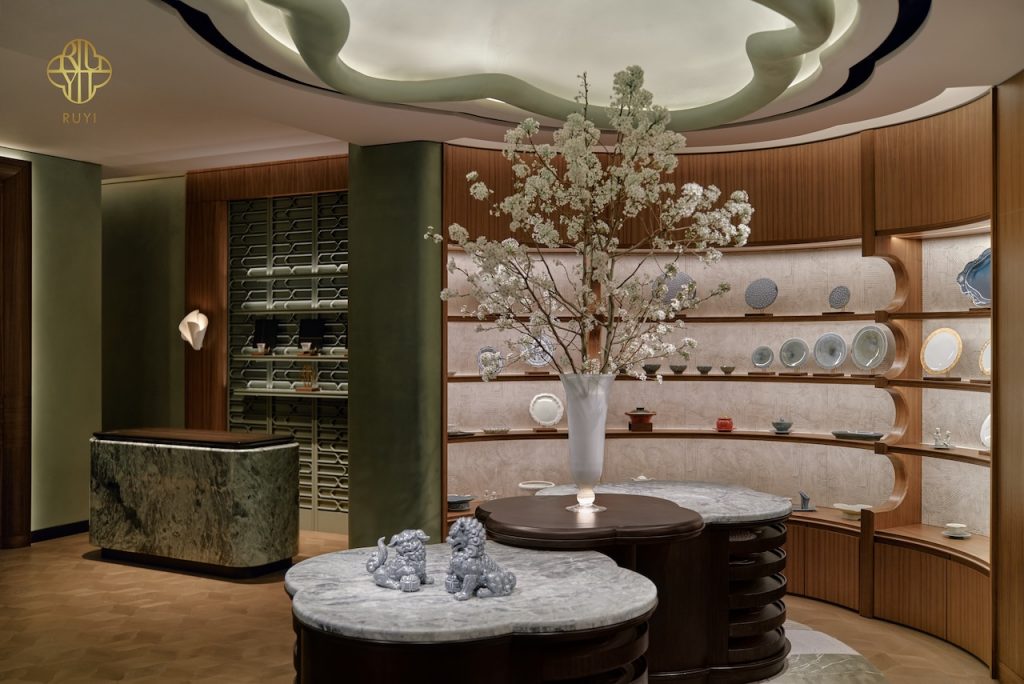
Sunlight glints off the Bund’s historic facades as people step into The Peninsula Hotel Shanghai, where porcelain plates upon tables look like artworks. More than a vessel, each bowl and teacup is a story bridging centuries of oriental craftsmanship and contemporary fine dining. Here, RUYI, a tableware brand inspired by Eastern aesthetics unveils its first global flagship.
Since its inception in 2017, RUYI has grown alongside Asia’s fine dining scene, witnessing industry milestones while helping elevate the aesthetics of Chinese cuisine. Its arrival on the Bund marks more than a retail expansion, and it signals the brand’s evolution from behind-the-scenes supplier to a cultural storyteller, bringing the philosophy of Eastern tableware to a wider audience.
The following is compiled from an interaction with the brand’s China region head, Helen Wang.
Bridge Eastern tableware and Chinese cuisine
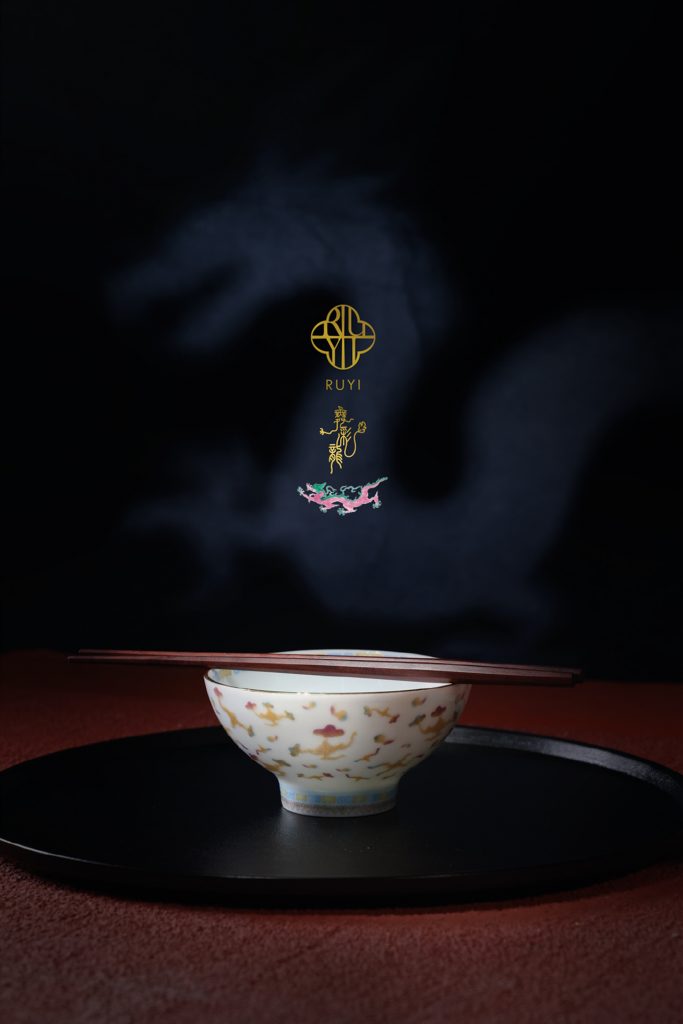
Before the rise of contemporary Chinese fine dining, RUYI’s founder, Desmond Cheng, saw a gap in the tableware landscape. Western tableware products, although elegant, were ill-suited to the forms and rituals of Chinese cuisine. Traditional Chinese pieces, in contrast, often felt outdated to modern styles. A disconnect persisted between plate and dish.
Born into a family of porcelain artisans, Cheng combined a knowledge of craft with a passion for food, recognizing that tableware is not decorative.
RUYI began not as an independent brand, but as a series within the French LEGLE Porcelain Group. Early market experience revealed that neither celebrated European brands nor Japanese tableware adapted from Western forms met Chinese culinary and aesthetic needs. Drawing on traditional patterns and fluidity, RUYI sought to create tableware that aligned with the Chinese culinary culture.
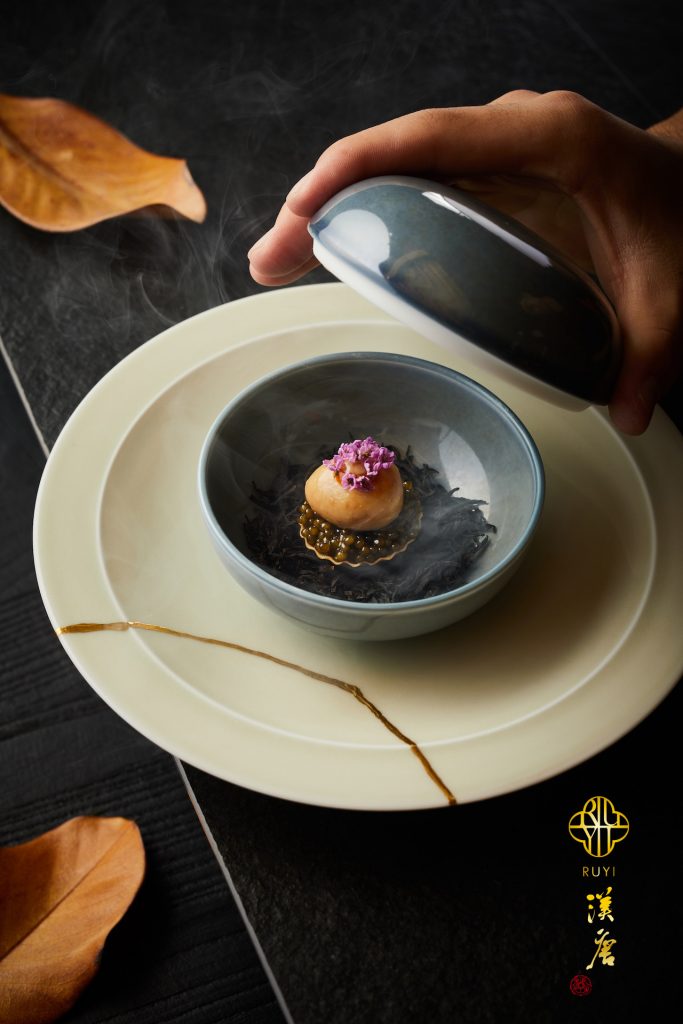
The pivotal moment came in 2012 with the inaugural Ruyi Banquet. Using a full-course feast as a canvas, the team introduced individual servings for each dish, pairing every plate and bowl with a purpose-built tableware. This approach allowed the cuisine’s pace and presentation to shine and highlighted the elevation of dish and tableware, leading to an industry-wide conversation on the possibilities of refined Chinese dining.
The concept later expanded to other cities, allowing RUYI to emerge from LEGLE’s B-end ecosystem into a standalone brand, where Eastern design and Chinese fine dining could nourish each other.
Harmonize with Chinese fine dining
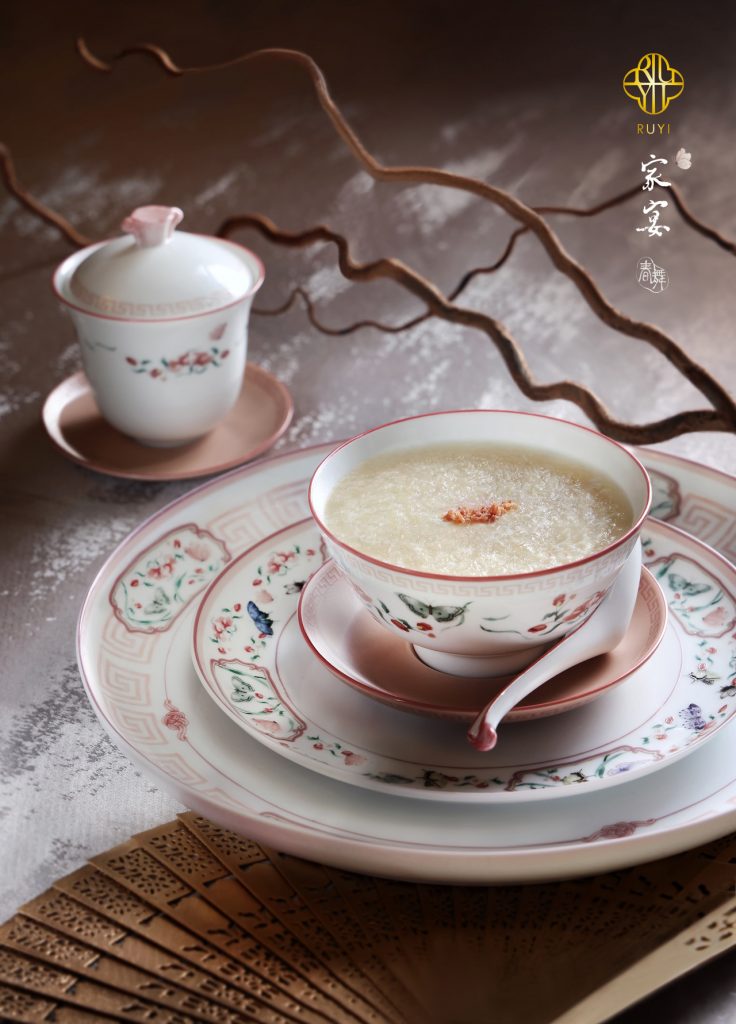
China, the birthplace of porcelain, deserved a globally recognized Eastern tableware brand. This vision drove RUYI’s formal launch as an independent brand in 2017. The following year, RUYI unveiled its first INFINI collection, inspired by the Taoist principle – The great form has no shape, translating timeless philosophical ideas into modern and flowing designs.
From LEGLE to RUYI, Eastern aesthetics remain central. With factories in France and Malaysia, it merges craftsmanship with an understanding of Chinese dining, producing bespoke pieces tailored to function and cultural resonance. The Ruyi Double-Steamer, for instance, has become a standout bestseller.
The Chinese market grew organically. Initial traction came through B-end hospitality networks. Post-pandemic, global attention on Chinese haute cuisine encouraged restaurants to curate tableware thoughtfully, driving demand for premium ceramics and accelerating RUYI’s expansion. Overseas, the brand has also established a footprint, such as Southeast Asia and Europe.
Early plans included simultaneous B- and C-end development, with a flagship originally slated for Hong Kong. Pandemic delays shifted focus to B-end growth. By 2023, this network matured, enabling RUYI to embark on a retail journey.
The debut of the Shanghai flagship retail store this year not only capitalizes on the city’s economic dynamism but resonates culturally – its historic architecture and the Peninsula’s East-West heritage reflect RUYI’s ethos of Eastern philosophy through a contemporary lens. The flagship, paired with the B-end showroom, signals the brand’s full-scale expansion across professional and retail channels.
Authenticity under pressure
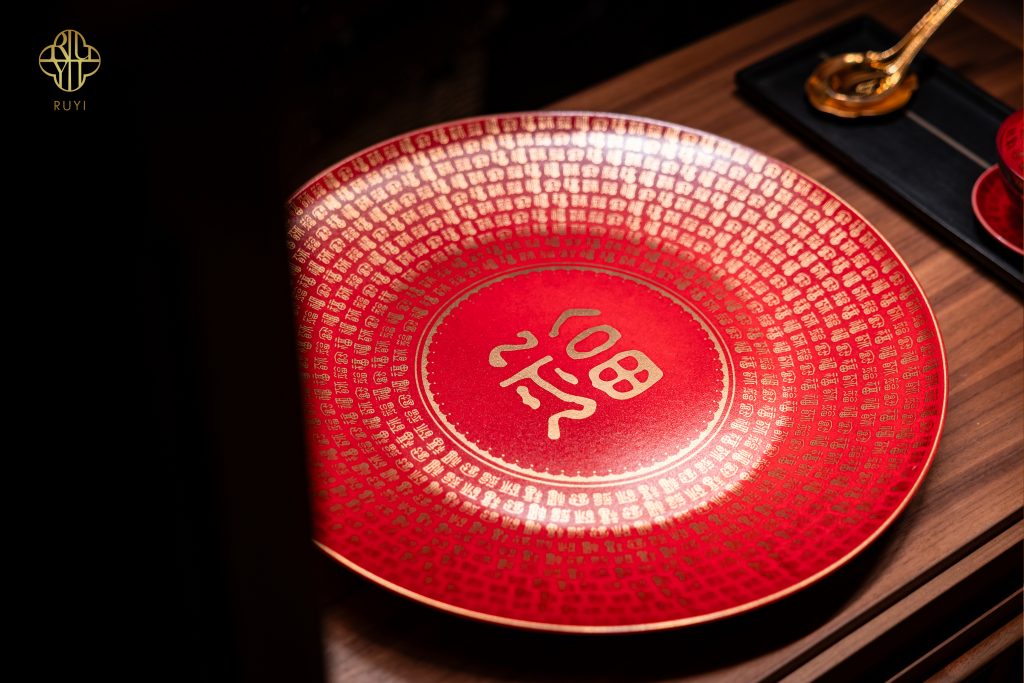
Counterfeit products become a challenge. Inferior materials, crude craftsmanship and brazen design theft have undermined the tableware industry. We do invest millions annually in anti-counterfeiting efforts, facing relentless imitation. Only a number of discerning restaurants – those with both aesthetic vision and operational excellence – resist knock-offs, upholding industry standards.
Anti-dumping policy in Europe further disrupted China’s traditional export channels. Ceramic makers, accustomed to multi-purpose tableware and low replacement frequency, shifted to commercial B-end production, often relying on imitation. Products as Ruyi-style create challenging authenticity, particularly in Southeast Asia, where the global expansion of Chinese cuisine has spread counterfeit products.
This challenge underscores RUYI’s retail strategy. Without a visible storefront, the tactile quality, authenticity, and design philosophy of genuine pieces remain unseen. The Shanghai flagship store provides an encounter with RUYI’s philosophy, allowing people to access the original Eastern tableware.
Q&A
T: Are there any challenges?
H: Not at this stage. RUYI stays niche, used by a select number of top-tier restaurants. Our priority isn’t rapid growth – it’s ensuring the brand fully embodies Eastern aesthetics.
T: Will the brand scale soon?
H: RUYI won’t be rolled out as widely as its French counterpart, LEGLE. This is intentional.
T: Is this due to cost?
H: Yes. RUYI sits at a higher tier, catering to a discerning clientele who value culture and design. To convey Eastern philosophy and aesthetics, we partner with restaurants and chefs who respect originality, like Wing, Xin Rong Ji, Ru Yuan, and 102 House.
T: Is it difficult to work with these high-end venues?
H: Yes. Restaurants capable of integrating RUYI into a full visual concept are rare. They need not only aesthetic sensibility but operational strength, as the tableware itself demands attention. Many venues stick to a few signature pieces, which expands reach but dilutes the cultural and philosophical message.
T: Who is the target audience?
H: On the retail side, the one is high-end consumers in China’s first- and second-tier cities with cultural and design appreciation, while the other one is those overseas customers are drawn to Chinese heritage, Eastern aesthetics, or premium gift-giving. Our goal isn’t scale for scale’s sake – it’s to create a flagship that communicates the depth of RUYI’s philosophy and the art of Eastern thought.